
 By
By The Renters Reform Act is bringing major changes to the rental market - and from 1st May 2026, many of the most important reforms come into force.
Here’s a clear, chronological breakdown of what’s changing and how it impacts you as a landlord:
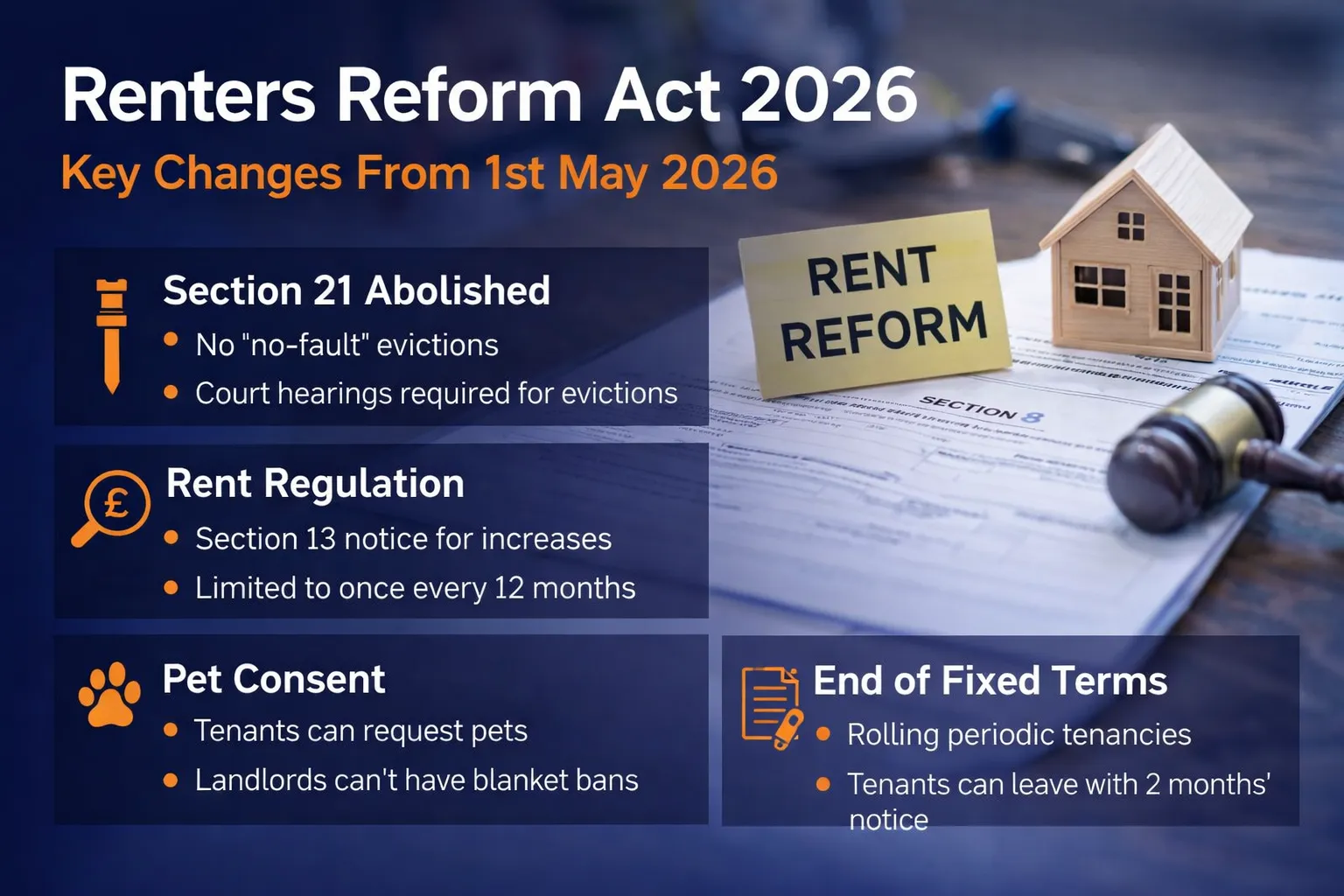
📅 From 1st May 2026 – Key Changes Begin⚖️ Section 21 Abolished
- No more “no-fault” evictions
- All possession must now go through Section 8 with valid grounds
- Every eviction will require a court hearing
Key grounds to understand:
- Ground 1 – Occupation by landlord or family
- Ground 1a – Sale of property
These are mandatory grounds for eviction but the tenant can’t be evicted within 12 months of signing a new tenancy, but notice can be served in month 8 with 4 months’ notice.
Importantly: You can’t market or re-let within 16 months of serving these notices.
Ground 8 - Rent arrears (again a mandatory ground for possession)
- Tenant must be 3 months in arrears
- 4 weeks’ notice to remedy
- Approximately 4 months before court action
📑 New Tenancy Structure (End of Fixed Terms)
- Fixed-term ASTs are abolished
- All tenancies become rolling periodic agreements
- Tenants can leave at any time with 2 months’ notice
- This effectively means the minimum tenancy could be as short as 2 months
📈 Rent Increases - Section 13 Only
- Rent increases must be done via Section 13
- 2 months’ notice required
- Limited to once per 12 months
- Must reflect market rent
- Tenants can challenge increases
🐾 Pets & Tenant Rights
- Tenants can request a pet
- Landlords must respond within 28 days
- A further 7 days to provide a valid refusal reason
Valid refusal reasons include:
- Head lease restrictions
- Property size or suitability
- Nuisance or environmental concerns
- Health or phobias
🚫 Blanket bans on tenants are no longer allowed
- Children
- Tenants on benefits
- Pets
💷 Rent Payments & Deposits
- Rent in advance limited to 1 month
- Only payable once tenancy is signed
- Holding deposits can still be taken and typically contribute toward the tenancy deposit
📅 By 31st May 2026 – New Requirement
All landlords must provide tenants with the official government guidance:
This must be issued to ensure tenants are fully informed of their rights under the new legislation.
Note: For fully managed properties we will be serving this on your behalf
📅 Coming Later (Not Immediate – But Important)🏛️ Late 2026
- Mandatory Landlord Ombudsman
- New PRS Property Database registration required
🏠 Future Phases
- Decent Homes Standard
- Awaab’s Law (strict timelines for hazard repairs)
- Will introduce tighter rules around property conditions and repair timescales
🚨 What This Means for Landlords
This isn’t just a legal update - it’s a complete shift in how tenancies are managed:
- More compliance and documentation required
- Longer eviction timelines
- Greater tenant rights and protections
- Increased financial risk if not managed correctly
👉 Need Help Navigating the Changes?
At NGU Homes, we’re already helping landlords prepare for these changes - ensuring full compliance while protecting your investment.
📩 Get in touch today for guidance, portfolio reviews, or full management support.
Stay compliant. Stay protected. Stay ahead.


Share this with
Email
Facebook
Messenger
Twitter
Pinterest
LinkedIn
Copy this link